Cleaning That Protects Surface Integrity
Soft Washing Services in Charleston for roofs, stucco, and siding with mold, algae, and organic buildup
Mold and algae grow where moisture lingers—on north-facing walls, beneath roof eaves, and across any surface shaded by trees or adjacent structures. Soft washing uses low-pressure application combined with specialized cleaning solutions to kill organic growth at the root rather than simply blasting it off, which prevents the rapid return that follows conventional pressure washing. Watson Exterior Services applies this method across Charleston properties where delicate materials like painted siding, aged stucco, or asphalt shingles cannot tolerate high PSI without suffering damage. The approach matters particularly on roofs, where aggressive pressure strips protective granules from shingles and shortens lifespan by years.
Coastal Charleston creates ideal conditions for mildew and algae—humidity stays elevated year-round, afternoon thunderstorms wet surfaces repeatedly, and the combination of warmth and moisture allows spores to colonize within days of landing. Soft washing addresses the biological component by applying solutions that penetrate porous materials and kill growth beneath the visible surface layer, meaning treated areas stay cleaner longer than surfaces that were merely rinsed.
Request a detailed estimate based on your current surface condition and the extent of organic buildup present.
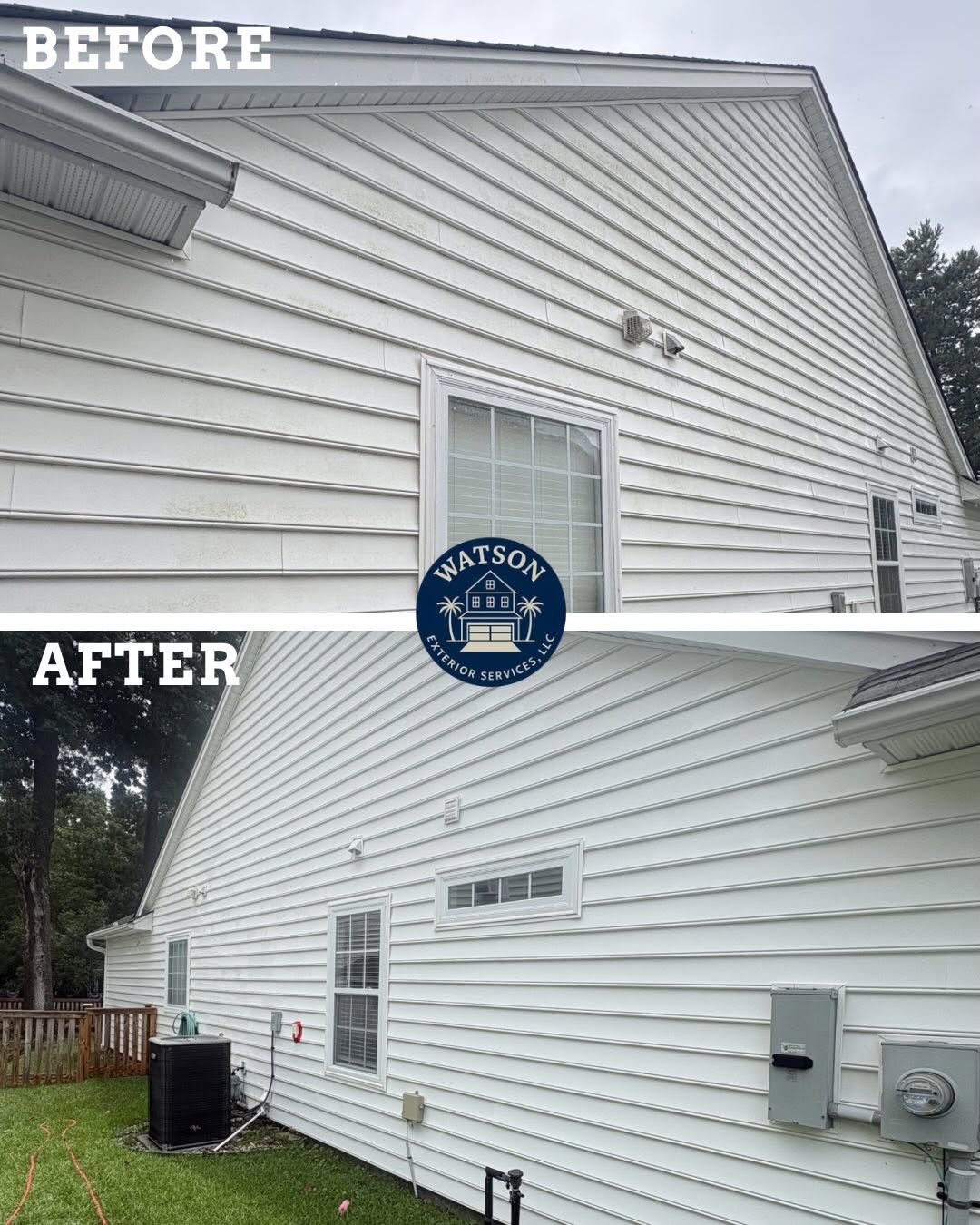
What You Notice Once Soft Washing Is Finished
The process involves applying biodegradable cleaning agents that break down the cellular structure of mold, mildew, and algae, then allowing dwell time for the solution to work before rinsing at pressures low enough that you could hold your hand in the spray without discomfort. Roofs receive particular attention—black streaks caused by Gloeocapsa magma algae disappear as the organisms die and wash away, and shingles regain their original color without losing the granular coating that provides UV protection and fire resistance.
After treatment, siding and stucco dry to uniform color without the green or black patches that indicated active growth, and surfaces shed water more effectively because the biofilm that trapped moisture is gone. You also notice the difference in how long surfaces stay clean—soft washing kills spores and root structures, so regrowth takes significantly longer compared to pressure washing, which removes visible growth but leaves behind the organisms' anchoring points.
Soft washing works on materials where mechanical abrasion causes harm: vinyl siding develops surface scratches under high pressure that become dirt traps, stucco loses texture and exposes aggregate, and painted wood loses its finish in strips. The chemical approach cleans without physical wear, preserving material integrity while achieving the same visual result.
Common Questions About This Service
Property owners usually ask about safety, effectiveness, and how soft washing differs from standard pressure cleaning before choosing this method.
What makes soft washing safer for roofs than pressure washing?
Asphalt shingles rely on embedded granules for protection—high-pressure spray dislodges these granules and accelerates weathering, while soft washing uses solutions that kill algae without mechanical force that damages the shingle surface.
How long does the cleaning effect last compared to regular pressure washing?
Soft washing kills organic growth at the cellular level, meaning treated surfaces typically stay clean for 12 to 24 months in Charleston's humid climate, compared to 6 to 9 months for pressure-washed surfaces where spores survive and regrow quickly.
Why do some areas of siding turn black or green faster than others?
Shaded sections, areas under roof drip lines, and walls facing prevailing moisture sources develop heavier growth because they stay damp longer—algae and mildew require moisture to thrive, so sun-exposed surfaces dry quickly and resist colonization.
When is soft washing recommended over standard pressure methods?
Any time the surface is porous, painted, aged, or integral to weatherproofing—this includes all roofing materials, EIFS stucco systems, older brick with deteriorating mortar, and wood siding where grain structure could be damaged by high-pressure streams.
What happens to the cleaning solution after it's applied?
Biodegradable formulations break down naturally after completing their function, and runoff dilutes rapidly in soil moisture—landscaping typically shows no adverse effects, though sensitive plants near treatment zones can be pre-wetted or covered as a precaution.
Watson Exterior Services selects soft washing for surfaces where preserving material condition matters as much as removing contamination, particularly on roofs and aged exterior finishes throughout Charleston. Schedule an evaluation to determine whether your property's buildup and surface types require this low-pressure approach.