
Storefronts That Reflect Business Standards
Commercial Pressure Washing in Charleston for businesses with sidewalk stains, building grime, and parking area buildup
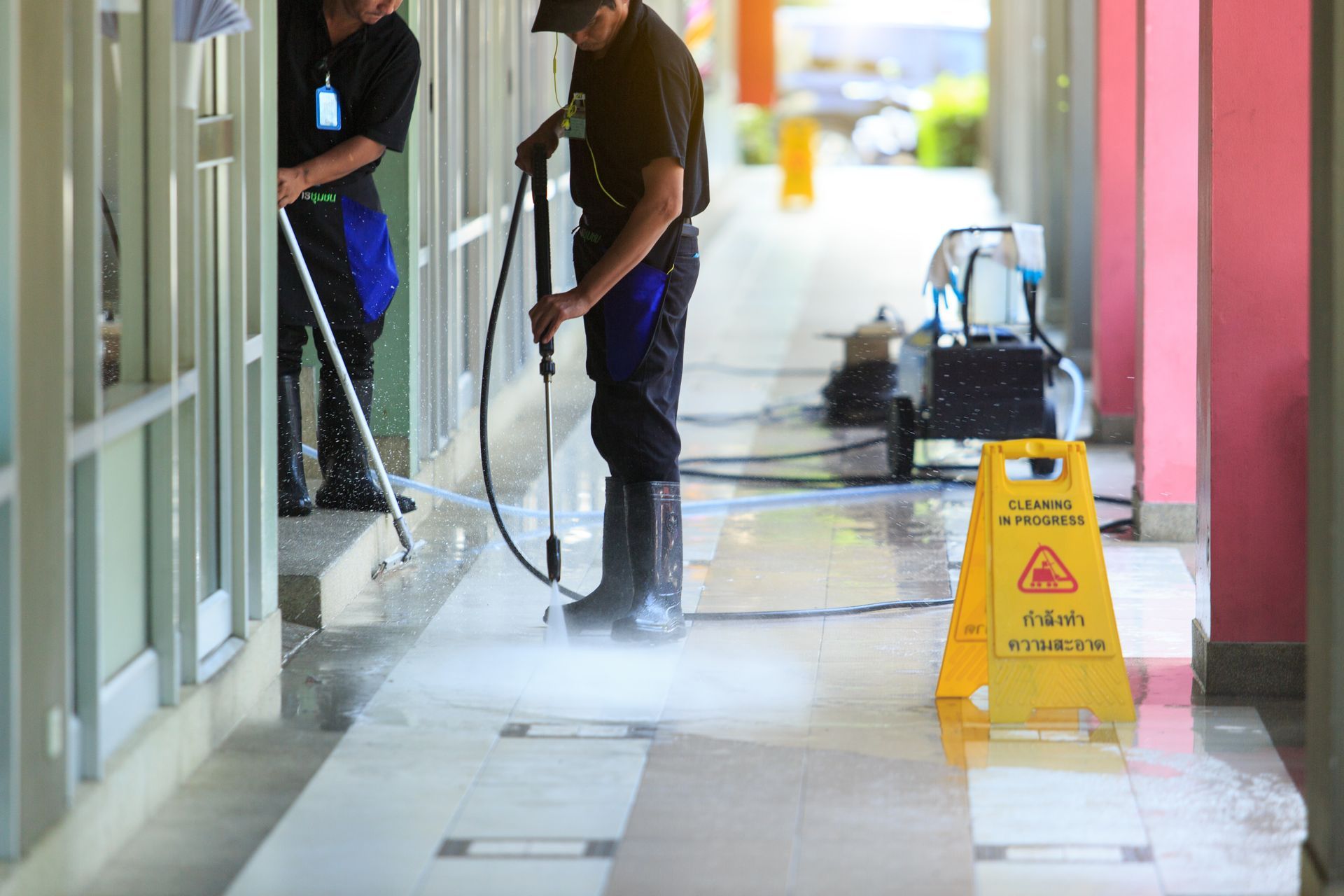
Foot traffic, vehicle exhaust, and weather leave visible marks on commercial properties—oil spots in parking areas, gum and beverage stains on sidewalks, and streaked buildup on glass and masonry. Watson Exterior Services provides commercial pressure washing throughout Charleston, targeting the specific contamination patterns that develop around storefronts, entryways, loading zones, and pedestrian walkways. The work addresses both aesthetic concerns and safety issues, since algae-covered walkways become slip hazards during morning dew or after rain.
Commercial cleaning differs from residential work in scope and scheduling—crews often operate during off-hours to avoid disrupting customer access, and the focus shifts to high-traffic zones where appearance directly affects business perception. Sidewalks outside retail locations accumulate gum, food residue, and beverage spills that darken concrete and create texture changes underfoot, while building exteriors collect exhaust particulate that bonds to brick and stucco in ways that rain cannot remove.
Arrange an on-site consultation to review which areas require regular maintenance and what scheduling works around your business operations.
How Commercial Pressure Washing Addresses High-Traffic Buildup
The service begins with identifying contamination types—organic growth like algae requires different treatment than petroleum-based stains or chewing gum, which softens under heat and pressure but doesn't respond to detergent alone. Parking areas see the heaviest oil and fluid accumulation, especially in spaces where vehicles idle or park long-term, and those stains penetrate asphalt and concrete surfaces where they darken and spread outward from the original drip point.
Once completed, walkways return to uniform color without the dark traffic patterns that develop along primary paths, building facades lose the gray film that obscures architectural detail, and parking areas no longer show the rainbow sheen of oil residue after rain. Entryways particularly benefit—customers notice clean thresholds and clear glass, and the absence of staining signals maintenance standards that extend beyond what's visible inside the business.
Commercial pressure washing often includes routine scheduling rather than one-time service, since high-traffic locations re-accumulate contamination within months. Seasonal pollen in Charleston adds another layer during spring, coating horizontal surfaces with yellow-green dust that bonds to existing moisture and creates a sticky film that traps additional dirt.
Answers to Frequent Service Questions
Business owners typically want to know about disruption, frequency, and what changes after exterior cleaning before committing to regular maintenance schedules.
How is scheduling handled to avoid disrupting business hours?
Most commercial pressure washing happens early morning, late evening, or during closed days, allowing surfaces to dry and foot traffic to resume without tracking water indoors or encountering wet walkways during peak customer times.
What's the difference between pressure washing a storefront versus a residential home?
Commercial work prioritizes high-contact zones like entryways, checkout areas visible through windows, and the first ten feet of sidewalk where customer perception forms, while residential cleaning distributes effort more evenly across the entire property.
Why do some parking lot stains return quickly after cleaning?
Fresh oil leaks or fluid drips re-stain cleaned concrete within days if the source vehicle continues parking in the same spot—pressure washing removes existing stains but cannot prevent new contamination from active leaks.
When should sidewalks be cleaned relative to seasonal foot traffic?
Cleaning before peak seasons ensures walkways look maintained when customer volume is highest, though Charleston's year-round humidity means algae and mildew develop continuously rather than appearing only in specific months.
What surfaces around a commercial building should not be pressure washed?
Signage, electrical fixtures, ventilation intakes, and older painted wood trim all risk damage from direct pressure—these areas either get hand-cleaned or avoided entirely depending on material condition and mounting method.
Watson Exterior Services tailors commercial pressure washing to business-specific traffic patterns and contamination types, working around operational schedules to minimize disruption. Schedule a property evaluation to establish a maintenance interval that keeps exteriors consistently clean without unnecessary frequency.