
Privacy Barriers That Look Maintained
Fence Cleaning in Charleston for wood fences, vinyl fences, and privacy fences affected by dirt and algae accumulation
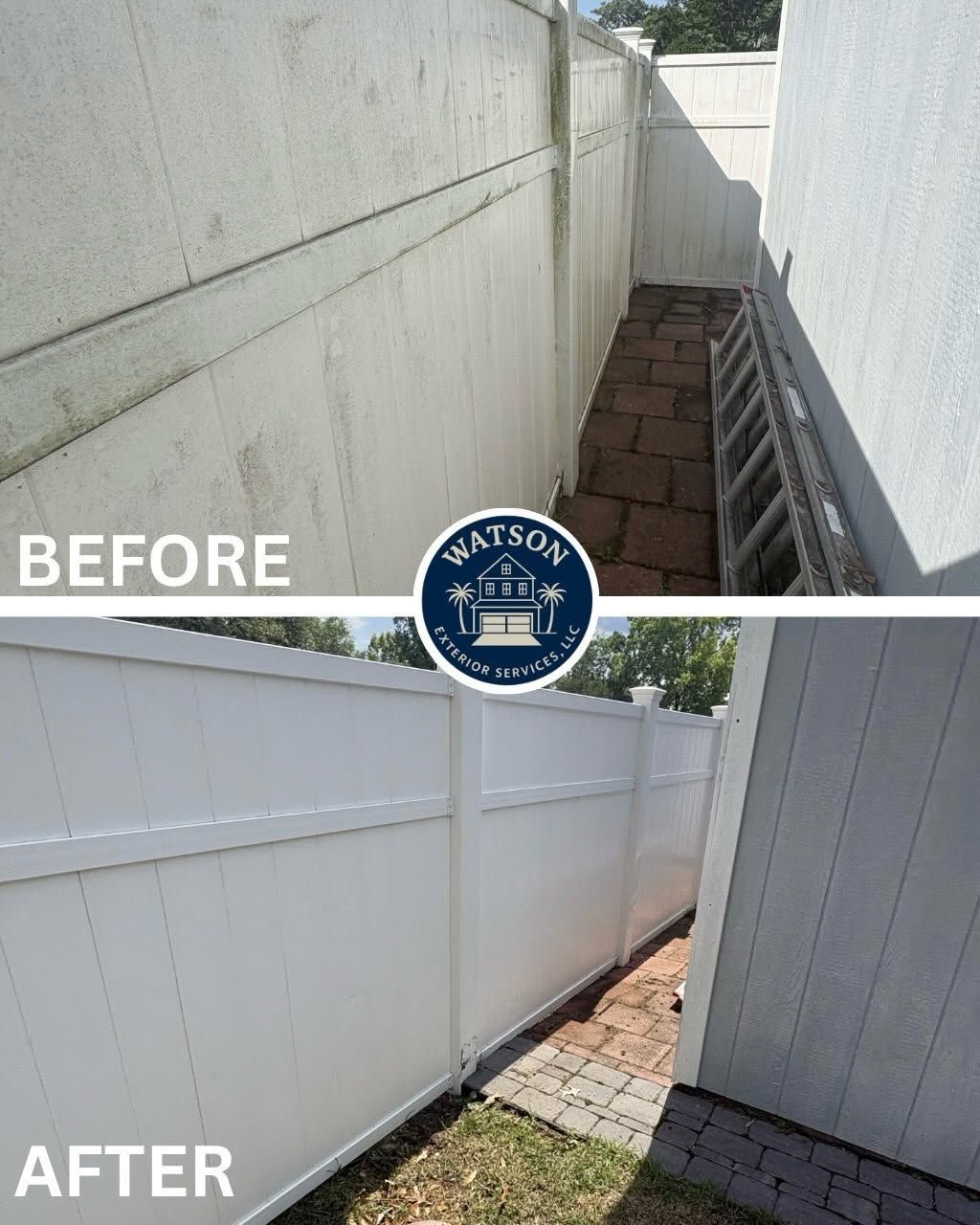
Fences collect dirt, algae, and organic staining faster in Charleston's humid climate, where moisture lingers on vertical surfaces long enough for green and black streaks to form. Watson Exterior Services cleans wood fences, vinyl fences, and privacy fences to remove buildup and prepare surfaces for staining or sealing when needed. You'll notice the difference immediately—wood grain becomes visible again, vinyl returns to its original color, and the algae smell disappears.
Cleaning involves applying solutions that break down organic growth, then using controlled pressure to lift dirt from textured wood or smooth vinyl without damaging the material. Wood fences often show gray weathering that hides the natural color underneath, while vinyl develops a chalky film that makes the fence look faded even when the material itself is intact.
Arrange an on-site consultation to review your fence material and current condition.
How Fence Cleaning Addresses Long-Term Deterioration
Wood fences benefit from algae and dirt removal before applying stain or sealant, since coatings won't adhere properly over contaminants and will peel prematurely. Vinyl fences don't require sealing but still need periodic cleaning to prevent permanent discoloration from embedded organic matter that etches into the surface if left untreated.
Once cleaned, wood fences show consistent color across all boards instead of patchy gray and brown areas, and the surface feels smooth rather than fuzzy from dirt-embedded fibers. Vinyl fences lose the green tint along the bottom rails and around post caps, returning to a uniform appearance that makes the entire fence line look newer.
Privacy fences also trap less debris along the base after cleaning, since removing the initial buildup reduces how quickly new organic matter clings to the surface. This extends the interval before visible staining reappears and makes future cleaning easier.
Common Questions About This Service
Homeowners typically ask about timing, preparation, and what cleaning accomplishes for different fence materials.
What preparation is needed before fence cleaning?
Clear any furniture, planters, or objects within two feet of the fence to allow access to all sections, and trim back vegetation that touches the fence so cleaning solutions can reach the surface.
How does cleaning prepare wood fences for staining?
Removing dirt and algae opens the wood grain so stain penetrates evenly instead of sitting on top of contaminants, which prevents peeling and ensures the finish lasts longer.
Why do vinyl fences turn green near the ground?
Moisture from soil splash and poor drainage keeps the lower sections damp, creating ideal conditions for algae growth that appears as green streaks and requires targeted cleaning to remove.
When is the best time to clean fences in Charleston?
Late winter or early spring works well because it removes buildup before new growth accelerates in warmer months, and wood has time to dry thoroughly if you plan to stain afterward.
What's included in fence restoration preparation?
Cleaning removes all surface contaminants and exposes any damaged boards or areas that need repair, giving you a clear view of the fence's condition before deciding on staining or other treatments.
Watson Exterior Services handles fence cleaning that prepares surfaces for long-term protection and restores the appearance of privacy barriers. Contact us to schedule an evaluation of your fence material and cleaning needs.