
Concrete That Shows Proper Care
Driveway & Concrete Cleaning in Charleston for properties with oil stains, tire marks, and embedded buildup on paved surfaces
Oil stains darken and spread on concrete driveways, tire rubber leaves black arcs where vehicles turn, and organic growth fills the porous surface texture until the aggregate becomes invisible beneath layers of contamination. Driveways and concrete walkways endure constant traffic, fluid exposure, and weather cycles that bond contaminants into the surface in ways that make casual cleaning ineffective. Watson Exterior Services applies driveway and concrete cleaning across Charleston to remove what's embedded rather than just surface-level, using pressure levels that reach into the porous structure without causing spalling or aggregate exposure. Concrete patios and sidewalks face similar contamination but from different sources—patios collect leaf tannins, pollen residue, and furniture rust stains, while sidewalks accumulate the same salt, mildew, and dirt that affect all horizontal surfaces in humid coastal areas.
Concrete's porosity means stains penetrate rather than sitting on top—oil soaks in and spreads laterally through capillary action, algae roots anchor in surface voids, and repeated wetting cycles drive contamination deeper over time. Effective cleaning requires enough pressure to break the bond and extract what's embedded, which is why concrete tolerates PSI levels that would destroy softer materials.
Schedule a property evaluation to assess stain severity and determine whether additional treatments beyond pressure washing are necessary for deep oil penetration.
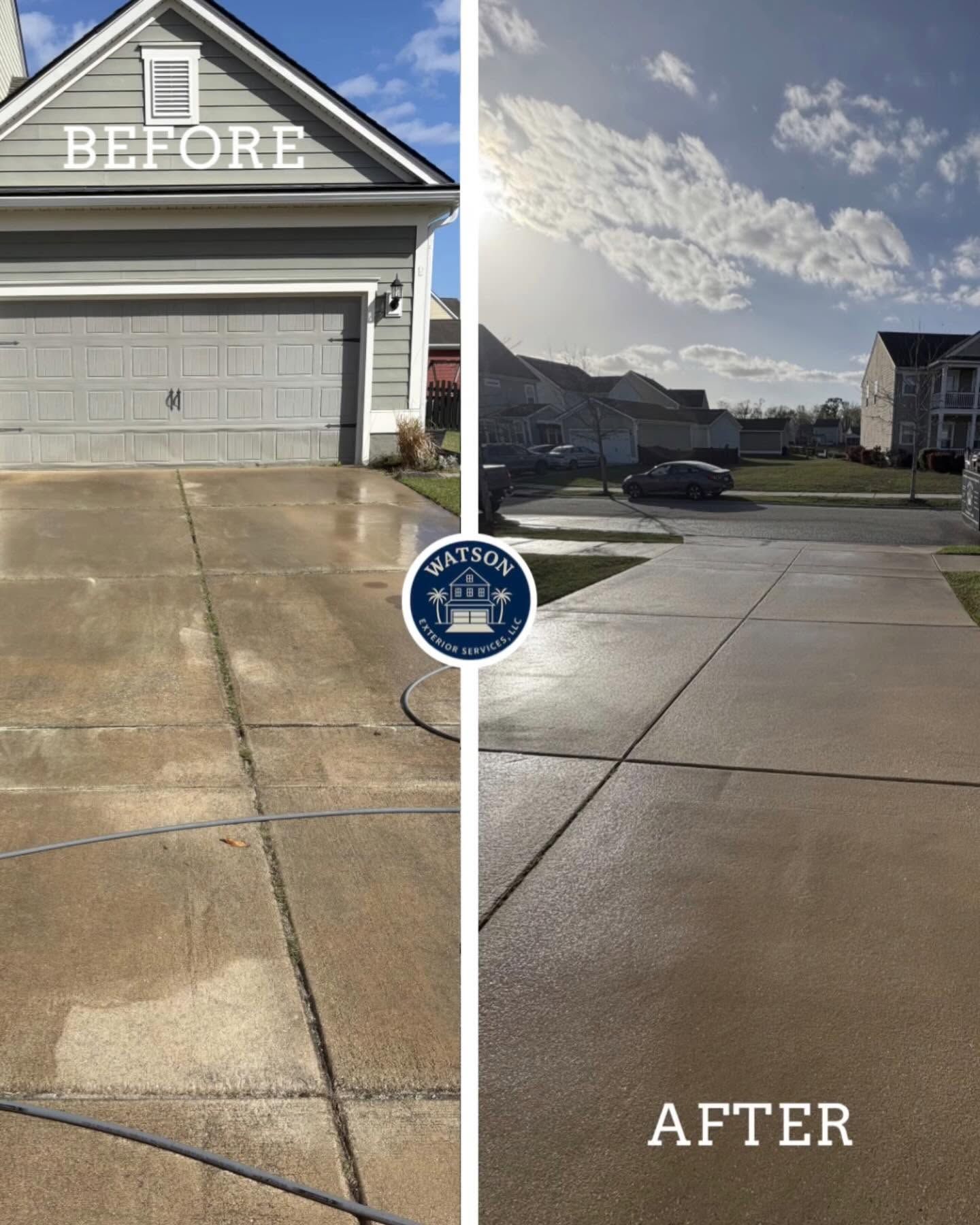
Why Concrete Cleaning Works for Embedded Contamination
The process uses concentrated pressure streams—often delivered through rotating surface cleaners that maintain consistent distance and coverage—to mechanically break apart the bond between contaminants and concrete. Oil stains require pre-treatment with degreasers that emulsify petroleum compounds, allowing water pressure to flush them from pore spaces, while organic stains from leaves or algae respond to pressure alone once the surface growth is disrupted.
After cleaning, concrete returns to its original light gray color instead of the dark, mottled appearance that develops under contamination, and the surface texture becomes visible again as embedded particles flush out. Driveways particularly show dramatic change—tire paths and oil spots disappear, and the cleaned surface reveals whether the concrete itself has deterioration like cracking or spalling that was hidden beneath grime layers. Walkways lose the slick biofilm that makes them hazardous when wet, and patios regain uniform color across the entire slab.
Driveway cleaning often exposes underlying issues that weren't visible before: cracks filled with dirt become obvious gaps, settled sections show more pronounced height differences, and areas where the surface is delaminating become apparent. This visibility helps homeowners address structural problems before they worsen, since contamination often masks early-stage concrete failure.
Questions Before Starting Your Project
Property owners generally ask about stain removal limits, surface durability, and post-cleaning maintenance before committing to concrete restoration work.
What determines whether an oil stain can be completely removed?
Stain age and penetration depth set the limit—fresh stains that haven't soaked deeply often lift completely, while years-old stains that have saturated several inches into the concrete may lighten significantly but leave faint shadows even after aggressive cleaning and degreasing.
How does pressure washing affect concrete that's already cracking?
Cleaning doesn't cause new cracks but will expose existing ones by removing the dirt that filled and hid them—the process can dislodge loose material along crack edges, which makes damage more visible but doesn't worsen the structural condition.
Why do some concrete surfaces develop dark streaks again within weeks of cleaning?
Algae spores resettle on damp concrete quickly in Charleston's humid climate, particularly in shaded areas where moisture doesn't evaporate rapidly—cleaned surfaces stay lighter longer if they receive regular sun exposure and good drainage prevents standing water.
When should concrete be sealed after pressure washing?
Sealing requires completely dry concrete, which in Charleston's humidity typically means waiting 48 to 72 hours after cleaning depending on temperature and sun exposure—sealing over damp concrete traps moisture and causes the sealer to delaminate or cloud.
What's the difference between cleaning a driveway and a decorative concrete patio?
Driveways tolerate higher pressure because they're typically thicker and designed for vehicle loads, while decorative surfaces with integral color, stamping, or exposed aggregate require lower pressure to avoid damaging the finish details or dislodging decorative elements.
Watson Exterior Services adjusts driveway and concrete cleaning techniques based on stain type, surface condition, and whether the concrete has decorative finishes that require protection during the work. Request a detailed estimate to identify which stains will respond fully to cleaning and which may require additional treatment or acceptance of partial improvement.