
Exteriors That Reflect Ongoing Maintenance
House Washing in Charleston for homes with dirt, grime, and organic staining on exterior walls
Vinyl siding, brick, and stucco all develop surface contamination that changes color and texture over time—what starts as fine dust becomes a bonded layer that traps moisture, promotes mildew growth, and makes homes look neglected even when other maintenance stays current. House washing removes this accumulation and restores original appearance without the repainting cost. Watson Exterior Services addresses Charleston homes where salt spray, pollen, vehicle exhaust, and organic growth combine into grime that standard rain cannot clear. The work involves adjusting technique based on wall material: vinyl tolerates moderate pressure, brick requires attention to mortar condition, and stucco needs lower pressure to avoid eroding the finish layer.
Charleston's coastal location and tree coverage create year-round contamination cycles—spring brings pollen that coats everything yellow-green, summer humidity feeds mold and algae, fall adds leaf tannins that stain where debris sits against walls, and winter moisture keeps surfaces damp enough for continuous biological activity. House washing interrupts these cycles by removing both the visible dirt and the underlying spores that cause regrowth.
Arrange an on-site consultation to review your home's specific exterior materials and current contamination levels.
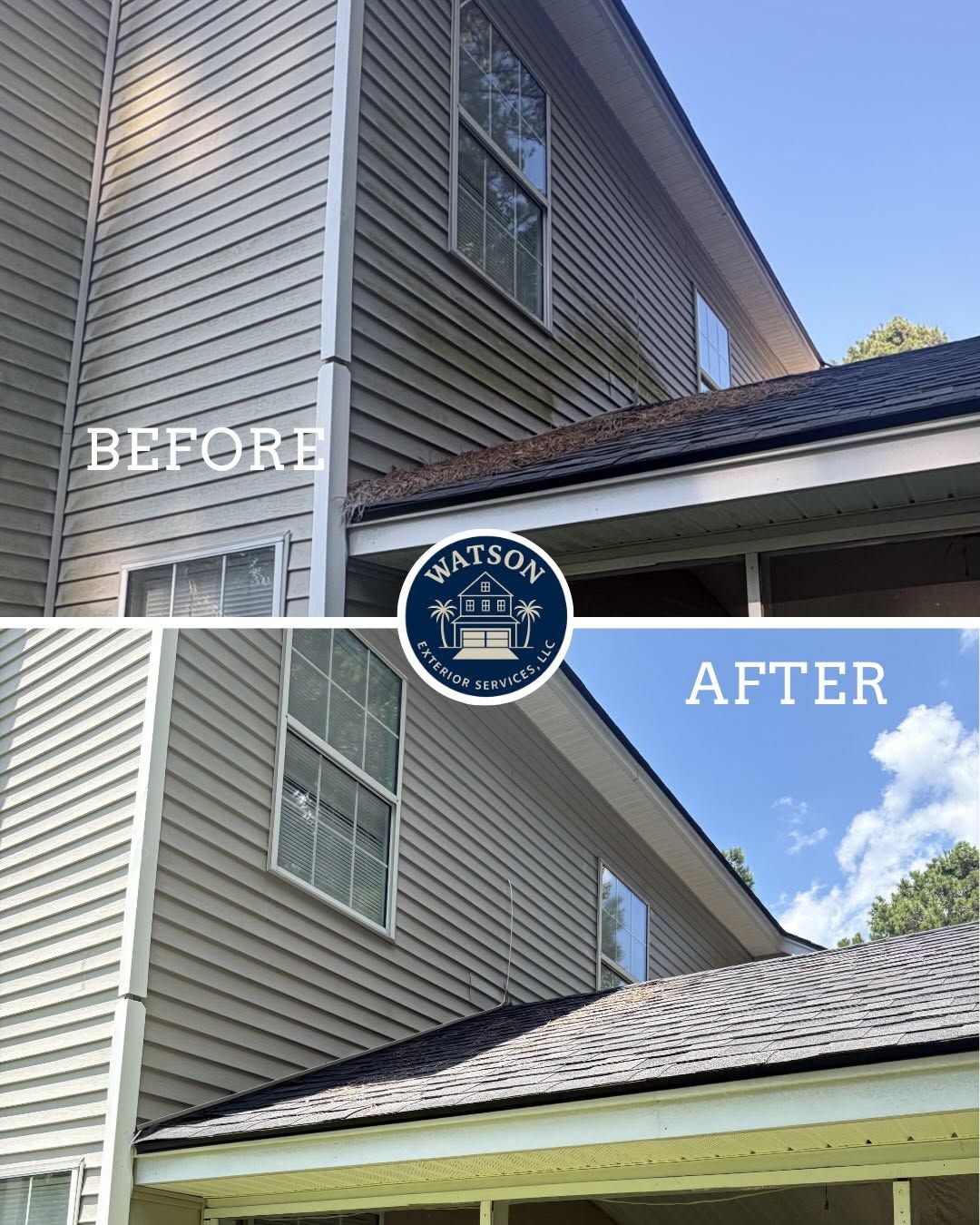
What Changes After Exterior Walls Are Cleaned
The work begins with identifying which contaminants are present—organic growth requires treatment solutions, oxidation staining on vinyl needs specific detergents, and embedded dirt in brick texture demands mechanical agitation that mortar joints may not tolerate. Each material type has a pressure threshold beyond which damage occurs: vinyl can warp or crack under concentrated streams, brick mortar can erode if already deteriorated, and stucco finish coats can delaminate if water is forced behind the surface.
Once complete, siding returns to its manufactured color rather than the grayed or yellowed tone that develops under grime layers, brick shows individual unit variation instead of uniform dullness, and stucco regains the slight texture variation that disappears under dirt buildup. Water behavior also changes—clean surfaces shed rain in sheets rather than absorbing it into contamination layers, which means walls dry faster and moisture-related damage slows.
House washing typically includes window exteriors and trim as part of addressing the full wall assembly, since frames and sills collect the same contaminants that affect primary surfaces. Properties with significant mildew or algae often show dramatic before-and-after differences, particularly on shaded elevations where green-black growth obscures the underlying material completely.
What Property Owners Usually Ask
Homeowners in Charleston generally want clarity on methods, risks, and frequency before scheduling exterior cleaning on their primary structures.
What's the risk of water getting behind siding during house washing?
Proper technique directs spray downward and avoids forcing water into seams, vents, or gaps—existing installation flaws may allow minor intrusion, but well-maintained siding systems with intact caulking and properly lapped joints resist water entry even under cleaning pressure.
How does house washing differ from painting in terms of improving appearance?
Washing removes contamination and restores original color, which often eliminates the need for repainting if the existing finish remains intact—homes that look faded due to dirt rather than actual paint degradation return to like-new appearance after cleaning.
Why do north-facing walls stay dirty longer after cleaning?
Reduced sun exposure means these surfaces dry more slowly, creating conditions where airborne spores can re-establish before the wall fully dries—this is a function of orientation and shade rather than cleaning quality.
When should brick homes be washed relative to mortar repointing work?
Cleaning before repointing allows masons to see actual joint condition without contamination obscuring deterioration, and cleaning after repointing risks dislodging fresh mortar before it fully cures—timing depends on the project sequence and mortar cure requirements.
What preparation helps house washing go more efficiently?
Trimming vegetation away from walls, removing or covering outdoor electrical outlets, and clearing items stored against the house all improve access and reduce the risk of spray contacting items that shouldn't get wet.
Watson Exterior Services matches house washing methods to the specific materials present on Charleston homes, adjusting pressure and detergent application to clean effectively without compromising surface integrity. Request a property evaluation to determine what approach your exterior walls require based on material type and contamination severity.