
High-Traffic Areas That Handle Daily Use
Parking Lot & Commercial Surface Cleaning in Charleston for parking lots, sidewalks, dumpster areas, and drive lanes with heavy traffic buildup
Parking lots and commercial surfaces accumulate oil stains, tire marks, dirt, and organic growth that create safety hazards and make properties look neglected. Watson Exterior Services cleans parking lots, sidewalks, dumpster areas, and drive lanes to remove buildup that affects traction and appearance. Oil spots become slippery when wet, tire marks create dark streaks across parking spaces, and algae grows in low spots where water pools after rain.
Cleaning high-traffic areas involves degreasing agents for oil contamination, pressure washing to lift embedded dirt from concrete or asphalt texture, and treating organic growth that makes surfaces slick. Dumpster areas require focused attention because leaked fluids and organic matter concentrate in these zones and create odors along with staining.
Arrange an evaluation to assess your commercial surface cleaning needs and traffic patterns.
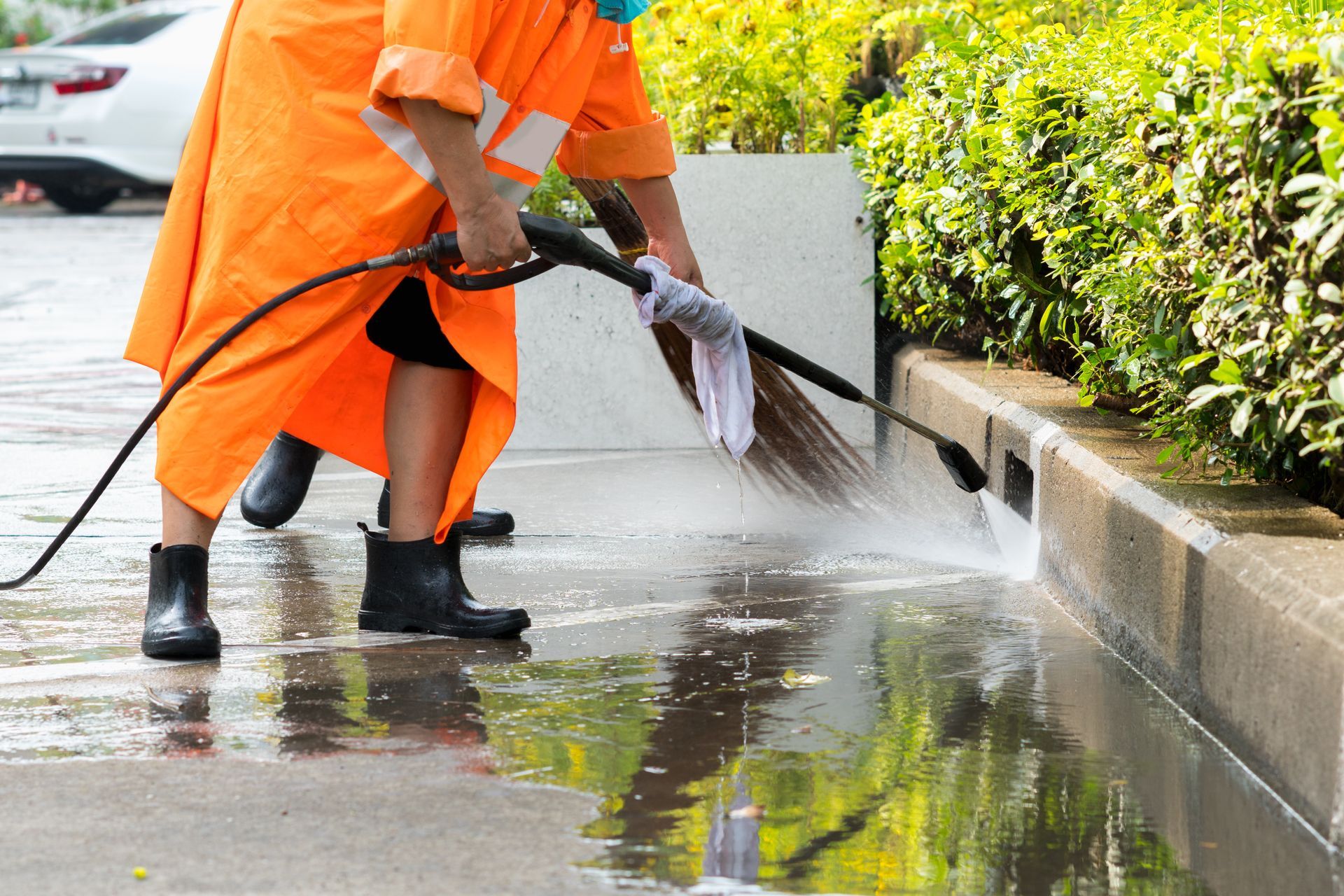
What Changes After Commercial Surfaces Are Cleaned
Professional parking lot cleaning removes the oil film that makes pavement slick during rain and the black rubber deposits that mark high-traffic lanes and turning areas. Sidewalks regain their original light color instead of appearing uniformly gray, and parking space lines become visible again when dirt no longer obscures the striping.
After cleaning, dumpster areas no longer emit odors from decomposing organic matter trapped in concrete pores, and the pavement drains faster because debris no longer blocks the surface texture. Drive lanes show defined edges, and the entire property presents a maintained appearance that affects how customers and tenants perceive the business.
Regular cleaning also extends pavement life by removing contaminants that break down asphalt binders and concrete sealers, which delays the need for resurfacing. Properties in Charleston benefit from scheduled cleaning because coastal humidity accelerates organic growth and salt deposits that degrade surfaces faster than in drier climates.
Answers to Frequent Service Questions
Commercial property managers usually ask about scheduling, what's involved in different surface types, and how cleaning affects long-term maintenance costs.
What's the difference between cleaning asphalt and concrete parking lots?
Asphalt requires gentler pressure to avoid surface damage and often needs degreasing treatments for oil absorption, while concrete tolerates higher pressure but shows staining more visibly and requires stronger solutions to remove embedded dirt.
How often do high-traffic commercial surfaces need cleaning in Charleston?
Most parking lots and sidewalks benefit from quarterly cleaning to manage the rapid buildup caused by humidity, rain, and organic growth, though dumpster areas may need more frequent attention.
Why do oil stains reappear quickly after cleaning?
Fresh oil leaks from vehicles create new stains continuously, which is why regular cleaning manages the issue rather than eliminating it permanently, and why identifying leak sources helps reduce recurrence.
What preparation is needed before parking lot cleaning?
Coordinate timing to minimize disruption during business hours, mark any known pavement damage to avoid, and ensure vehicles are cleared from sections scheduled for treatment.
When should sidewalks be cleaned to improve safety?
Address sidewalk cleaning before wet seasons when algae and dirt create slippery conditions, or immediately after noticing green growth in shaded sections where moisture doesn't evaporate quickly.
Watson Exterior Services handles parking lot and commercial surface cleaning that maintains safety and appearance across high-traffic areas. Contact us for a site assessment based on your property's traffic volume and surface conditions.