
Outdoor Surfaces Built to Last Years
Deck & Patio Cleaning in Charleston for high-traffic areas exposed to coastal humidity and organic growth
Watson Exterior Services handles deck and patio cleaning for wood decks, composite decks, concrete patios, paver patios, and outdoor living areas throughout Charleston. Coastal humidity accelerates algae, mildew, and organic buildup on all outdoor surfaces, creating slick conditions and discoloration that worsen with each season. The cleaning process restores traction and appearance by removing embedded contaminants that cling to textured surfaces and grout lines.
Wood decks require different pressure and cleaning agents than composite materials, and paver patios need specialized treatment to avoid displacing joint sand while still extracting dirt from porous stone. Concrete surfaces develop black streaks and green patches where moisture collects, and those stains penetrate deep enough that surface rinsing alone won't remove them.
Schedule a property evaluation to identify specific cleaning requirements for your deck or patio materials.
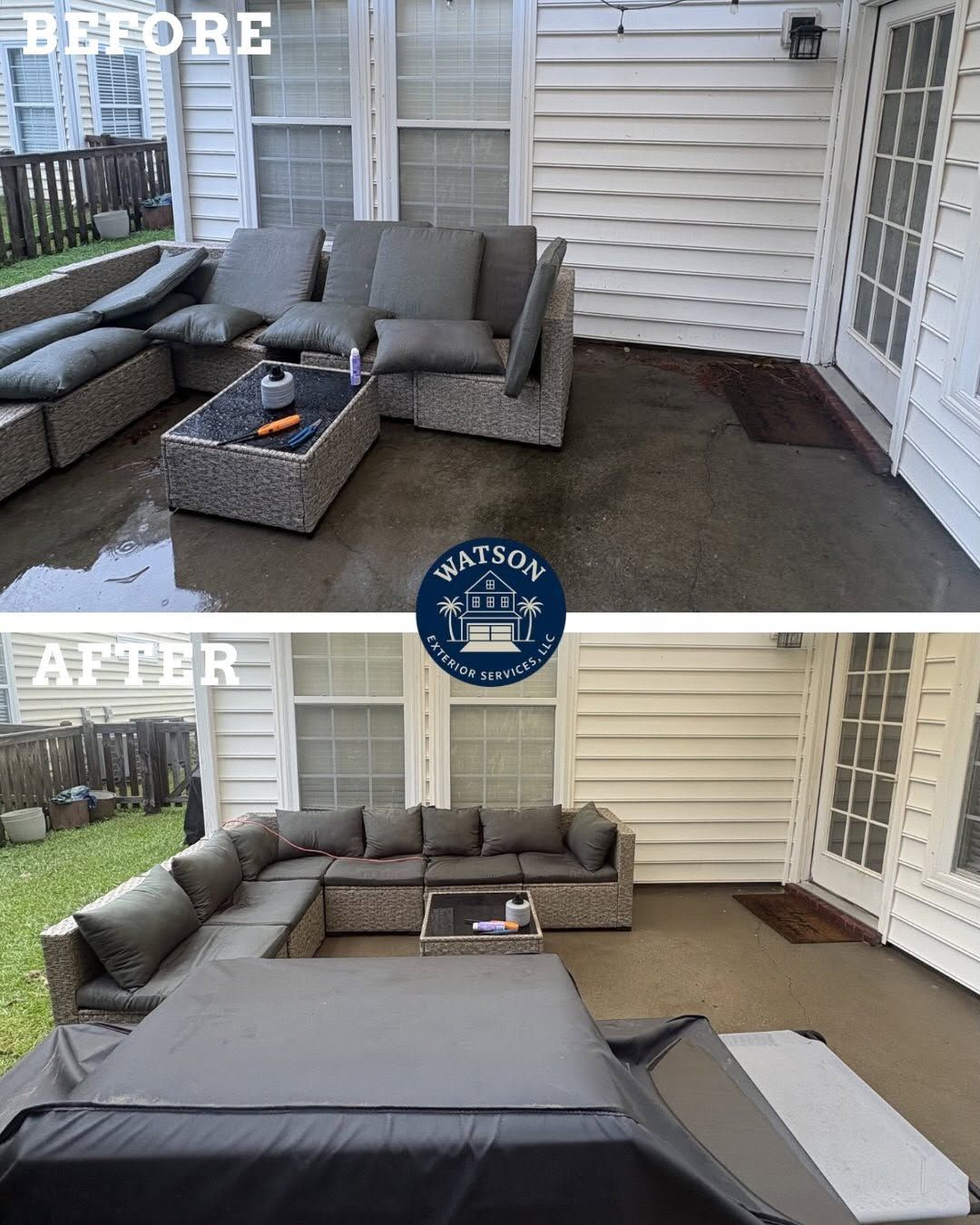
What Proper Cleaning Does for Different Materials
Wood decks respond to controlled pressure washing that lifts dirt without splintering fibers, while composite decking needs lower pressure to avoid surface damage but still requires strong enough treatment to break down algae films. Paver patios involve cleaning each stone and the joints between them, then stabilizing the sand to prevent weed growth and shifting.
After cleaning, wood surfaces show the original grain pattern again instead of gray weathering, composite decks return to their manufactured color without the chalky film, and concrete patios lose the black streaking and green patches that made them look neglected. Pavers regain definition between each stone, and the entire surface feels stable underfoot rather than slippery.
The work also includes clearing debris from between deck boards and paver joints, which prevents water from pooling and accelerates drying after rain. Removing organic matter now reduces how quickly new growth appears and extends the time before the next cleaning becomes necessary.
Questions Before Starting Your Project
Property owners in Charleston often ask about timing, materials, and what the cleaning process involves for different outdoor surfaces.
What happens to the space between pavers during cleaning?
The joints are cleared of dirt and organic matter without removing stabilizing sand, then inspected to determine if re-sanding is needed to prevent shifting or weed emergence.
How does Charleston's coastal climate affect how often decks need cleaning?
Salt air and consistent humidity create conditions where mildew and algae grow faster than in drier regions, typically requiring annual cleaning to prevent buildup that damages surfaces over time.
Why does composite decking still get dirty if it's advertised as low-maintenance?
Composite materials resist rot and splintering but still collect organic films, pollen, and algae on the surface, which create discoloration and slick spots that pressure washing removes.
What's the difference between cleaning wood and composite decks?
Wood requires careful pressure control to avoid damaging fibers and may need brightening agents after cleaning, while composite surfaces tolerate different cleaning solutions but require lower pressure to protect the outer layer.
When should concrete patios be sealed after cleaning?
Sealing works best once the concrete has fully dried, usually within 24 to 48 hours depending on weather, and only after all contaminants have been removed so the sealer bonds correctly.
Watson Exterior Services restores outdoor living areas by matching the cleaning method to the material and buildup level. Request a detailed estimate based on your current deck or patio condition and surface type.